Industry challenges
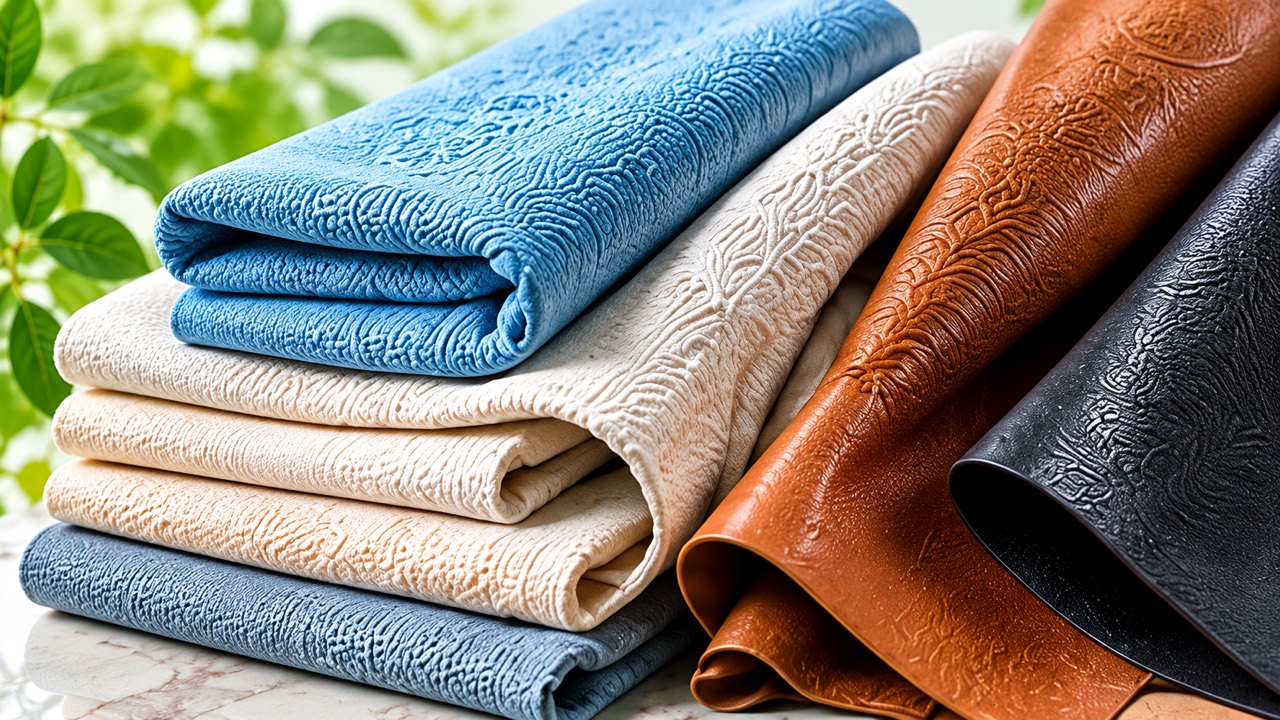
Textiles and fibre materials cover conventional fabric finishing as well as newer materials such as vegan and bio-based leather. Finishing cares about adhesion, hand feel, wash fastness, breathability and fixing functional components; vegan leather cares about the material skeleton, flexibility, strength, humidity resistance and surface texture. The required nanocellulose form and function differ clearly between them.
What nanocellulose does
With its high aspect ratio and network structure, CNF serves rheology control, film-forming assistance and fixing of functional components in fabric finishing; CNC suits low-viscosity, transparent and fine surface functionalisation.
BC has a naturally formed three-dimensional nanofibre network and is being studied for vegan leather, bio-based leather and leather substitutes, acting as the material skeleton that is further compounded with polymers and plasticisers.
How to choose and use by direction
| Direction | First choice | Main role | How to trial | Key tests |
|---|---|---|---|---|
| Conventional textile finishing | CNF / C-CNF | rheology control, surface coverage, fixing functional particles, film-forming aid | pre-disperse CNF → add to the finishing bath → add functional components → pad or coat → dry and cure; start from 0.5%–2% dry basis | hand feel, add-on, strength, breathability, wash fastness and the target function |
| Vegan / bio-based leather | BC gel membrane | three-dimensional nanofibre skeleton compounded with flexible polymers or plasticisers | BC gel membrane → partial dewatering → impregnate with a flexible or plasticising system → penetration → dry → surface finishing | tensile, elongation, tear, flex, abrasion, water uptake and wet strength |
Other options: consider CNC for low-viscosity transparent finishing; evaluate hydrophobically modified CNF/CNC for hydrophobic composites; if BC is added to an existing polymer system for reinforcement rather than used as a complete membrane skeleton, choose a BC dispersion.
Points to watch in trials
Textile finishing: more CNF is not better. Excess raises bath viscosity, stiffens the fabric or reduces breathability, so control dosage and fabric add-on together.
BC vegan leather: a BC gel membrane dried directly shrinks and stiffens as inter-fibre hydrogen bonds strengthen, so development usually follows BC network skeleton + flexible or plasticising components + surface finishing rather than drying a BC membrane into leather as it is.
Common issues
- Fabric stiff after finishing: lower the CNF dosage or add-on.
- Finishing bath too viscous: lower the CNF solids or switch to CNC.
- Poor wash fastness: combine with a suitable binder or cross-linking system.
- BC stiffens and shrinks after drying: add flexible or plasticising components and optimise drying.
- BC leather lacks water resistance: improve by compounding, cross-linking or surface treatment.
- BC material tears easily: optimise the composite ratio and impregnation depth.
Note
For material selection and preliminary trials in textile finishing, fibre composites and vegan leather only, not fixed formulations or final process parameters. CelluBio supplies CNF, CNC and BC in gel membrane, dry membrane and dispersion forms for fabric finishing, functional composites and vegan-leather development.