
Applications
Nanocellulose application guides for 17 industries: the challenges, what the material does, recommended and alternative grades, trial plans and common issues

Coatings & Inks
In water-based coatings and inks nanocellulose builds a micro/nano fibre network that improves thickening, thixotropy, suspension and anti-settling, while helping coating uniformity and system stability. Surface-modified grades also serve pigment dispersion and functional coatings.
View application guide →
Adhesives & Binders
With a high specific surface area and rich surface groups, nanocellulose takes part in interfacial bonding, rheology control and structural reinforcement of adhesive systems. In wood, paper, glass and composite bonding it acts as a bio-based functional component that improves bond-line stability and overall performance.
View application guide →
Paper & Paper-based Materials
Nanocellulose forms a fine network between pulp fibres, improving fibre bonding, dry strength, surface density and barrier properties. Suitable for packaging paper, cups, food boxes, bags and high-performance paper-based materials.
View application guide →
Hydrogels & Soft Materials
CNF, CNC and BC all contribute to hydrogel structures: the nanofibre network provides thickening, water retention, structural support and loading of functional components. Suited to functional hydrogels, flexible materials, adsorption gels and composite gel systems.
View application guide →
Cosmetics & Personal Care
As a natural bio-based functional material, nanocellulose improves thickening, suspension, stability, film forming and skin feel, helping to stabilise particles and actives. BC can also be made into high-water-content membranes for face masks and related personal-care materials.
View application guide →
Packaging Films & Barrier Coatings
Nanocellulose forms a dense nano-network that provides film forming, reinforcement and gas barrier in films and coatings. Especially suited to food packaging, transparent films, paper-plastic laminates and bio-based high-barrier coatings.
View application guide →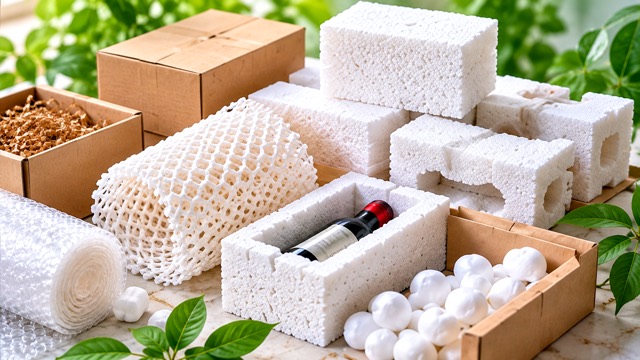
Aerogels & Porous Materials
Nanocellulose builds lightweight three-dimensional porous skeletons and is a key building block for bio-based aerogels and porous materials, enabling lightweight, cushioning, adsorbing, insulating and functional-loading materials for packaging, adsorption and functional porous applications.
View application guide →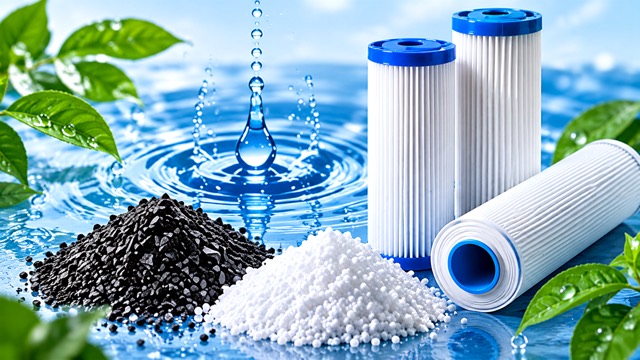
Water Treatment & Adsorption
With a high specific surface area and a readily functionalised surface, nanocellulose captures and separates target substances through carboxyl, cationic or hydrophobic modification. Applicable to heavy metals, dyes, suspended pollutants and oil-water separation.
View application guide →
Food & Beverage
Specific nanocellulose materials are studied for rheology control, suspension, emulsion stability and structure building in food systems, with development potential in ice cream, chocolate, dairy and composite foods. Commercial use requires confirming food regulations, purity and market access.
View application guide →
Plastics & Polymer Composites
With its high aspect ratio, high specific surface area and good mechanics, nanocellulose acts as a bio-based nano-reinforcement that improves polymer strength, stiffness, dimensional stability and functionality. Surface modification improves compatibility with different resin systems.
View application guide →
Batteries & New Energy
In separator coatings CNC works as a functional nano-component that tunes coating structure, interfaces and wettability; in water-based electrode slurries CNF helps suspension, rheology, particle bridging and electrode structural stability. Different nanocellulose forms suit different energy-material systems.
View application guide →
Flexible Electronics
Lightweight, flexible, film-forming and easy to functionalise, nanocellulose serves as transparent substrate, structural skeleton and carrier in flexible materials. Combined with conductive fillers it supports flexible electrodes, sensors, electronic films and wearable materials.
View application guide →
Cement, Mortar & Construction
Through its micro/nano fibre network and interfacial action, nanocellulose contributes to water retention, rheology, microstructure control and toughening of cement-based materials, with development value in UHPC, high-performance concrete, mortar and engineering materials for hydraulic, bridge and tunnel works.
View application guide →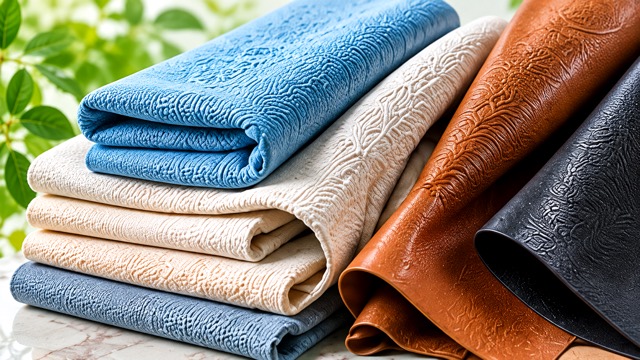
Textiles & Fiber Materials
In textile finishing nanocellulose provides film forming, adhesion, rheology control and loading of functional components to build functional fibre surfaces; BC forms a continuous three-dimensional fibre network for bio-based vegan leather, flexible sheets and composite fibre materials.
View application guide →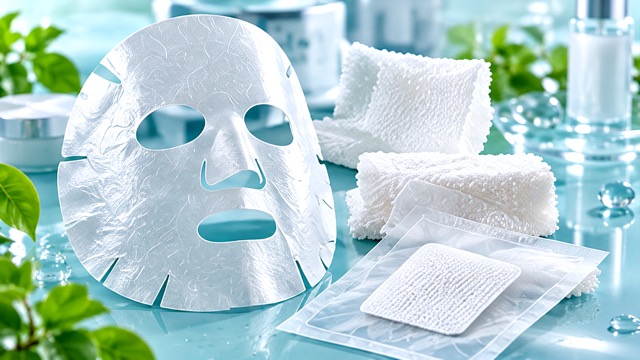
Bacterial Cellulose Membranes
BC has a naturally formed ultrafine three-dimensional fibre network, high water-holding capacity and a ready-made membrane form, suited to face-mask substrates, wet membranes, medical dressings and functional composite membranes. Loading active components extends it to higher-value biofilm materials.
View application guide →
Structural Color & Photonics
Structural-colour CNC self-assembles into chiral nematic structures that show vivid red, green, blue and iridescent colours coming from nanophotonic structure rather than dyes. Applications include anti-counterfeiting labels, photonic pigments, premium packaging, nail art, gem-like jewellery, decorative coatings and optical materials, supplied as liquid, powder or film with custom colours.
View application guide →
Agriculture
With good film forming, thickening, water retention, interfacial bonding and loading capacity, nanocellulose is used in pesticide formulations, slow-release fertilisers, seed coatings and functional agricultural materials, and extends to fresh-keeping of produce, agricultural coatings and bio-based carriers.
View application guide →Your industry not listed?
Tell us your system, process and target performance and we will help with selection and a trial reference.
Contact us →