
Why CelluBio
Focused on nanocellulose, from material selection to application support: more efficient material solutions for research and industrial customers
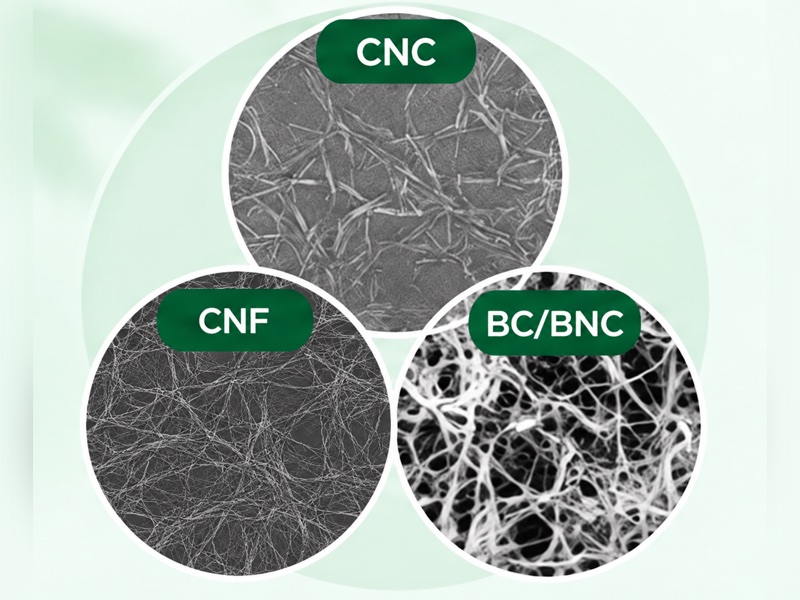
CNC · CNF · BC/BNC
Standard, functionalised and application-specific nanocellulose materials
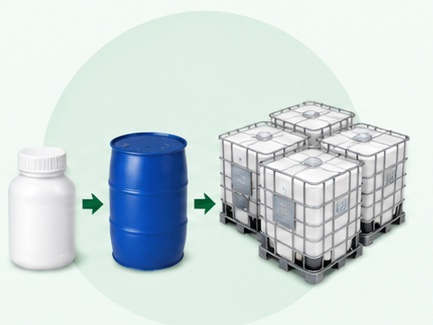
From research samples to volume supply
Gram, kilogram, pilot and volume quantities
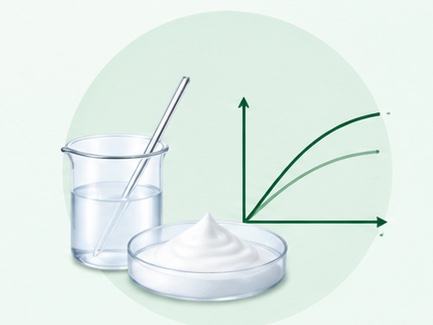
Material selection and application support
Professional selection and application advice based on your system, process and target performance
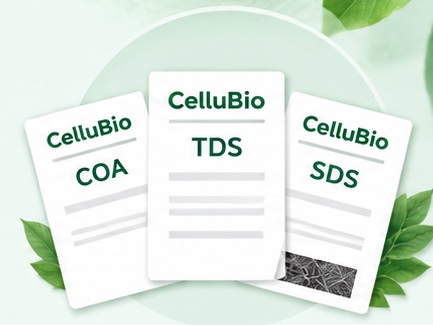
Complete technical documentation
COA, TDS, SDS, characterisation data and application guides
Biobased materials for a better future
Featured
Hot Products
Focused on nanocellulose: cellulose nanocrystals (CNC), cellulose nanofibrils (CNF), bacterial cellulose (BC/BNC) and functionalized bio-based materials
Applications
Applications
From coatings and inks to new-energy materials: nanocellulose application guides for 17 industries

01
Coatings & Inks
In water-based coatings and inks nanocellulose builds a micro/nano fibre network that improves thickening, thixotropy, suspension and anti-settling, while helping coating uniformity and system stability. Surface-modified grades also serve pigment dispersion and functional coatings.
View application guide →
02
Adhesives & Binders
With a high specific surface area and rich surface groups, nanocellulose takes part in interfacial bonding, rheology control and structural reinforcement of adhesive systems. In wood, paper, glass and composite bonding it acts as a bio-based functional component that improves bond-line stability and overall performance.
View application guide →
03
Paper & Paper-based Materials
Nanocellulose forms a fine network between pulp fibres, improving fibre bonding, dry strength, surface density and barrier properties. Suitable for packaging paper, cups, food boxes, bags and high-performance paper-based materials.
View application guide →
04
Hydrogels & Soft Materials
CNF, CNC and BC all contribute to hydrogel structures: the nanofibre network provides thickening, water retention, structural support and loading of functional components. Suited to functional hydrogels, flexible materials, adsorption gels and composite gel systems.
View application guide →
05
Cosmetics & Personal Care
As a natural bio-based functional material, nanocellulose improves thickening, suspension, stability, film forming and skin feel, helping to stabilise particles and actives. BC can also be made into high-water-content membranes for face masks and related personal-care materials.
View application guide →
06
Packaging Films & Barrier Coatings
Nanocellulose forms a dense nano-network that provides film forming, reinforcement and gas barrier in films and coatings. Especially suited to food packaging, transparent films, paper-plastic laminates and bio-based high-barrier coatings.
View application guide →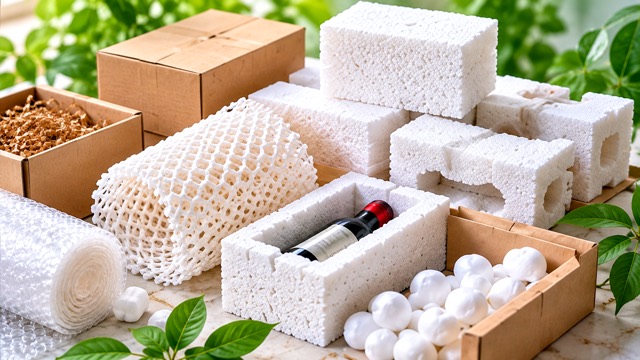
07
Aerogels & Porous Materials
Nanocellulose builds lightweight three-dimensional porous skeletons and is a key building block for bio-based aerogels and porous materials, enabling lightweight, cushioning, adsorbing, insulating and functional-loading materials for packaging, adsorption and functional porous applications.
View application guide →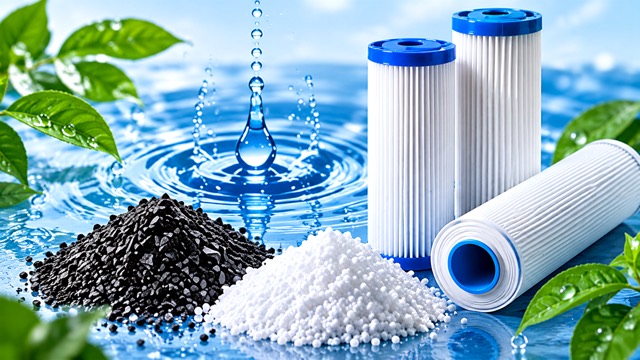
08
Water Treatment & Adsorption
With a high specific surface area and a readily functionalised surface, nanocellulose captures and separates target substances through carboxyl, cationic or hydrophobic modification. Applicable to heavy metals, dyes, suspended pollutants and oil-water separation.
View application guide →Development Trends in Nanocellulose-Reinforced Composites
Understand the development trends in nanocellulose-reinforced composites, with a focus on the reinforcement mechanisms, interfacial interactions, and application prospects of CNC and CNF in polymers, bio-based composites, rubber, coatings, and construction materials.
Development Trends in Bio-Based Barrier Materials
Against the backdrop of sustainable packaging development, the use of cellulose and other bio-based polymers to construct high-barrier materials has emerged as an important area of research. The dense networks formed by nanocellulose can help create longer and more tortuous pathways for gas diffusion, making nanocellulose a promising material for enhancing oxygen and other gas barrier performance.
Research and Application Directions of Nanocellulose-Based Hydrogels
Nanocellulose possesses abundant surface hydroxyl groups, a high specific surface area, and a strong ability to construct three-dimensional networks, enabling it to form functional hydrogels either independently or in combination with other polymers. Current research is increasingly focused on the regulation of mechanical properties, functional loading, stimuli-responsive behavior, and applications in biomedical materials, flexible materials, adsorption, agriculture, and related fields.
Need a customized solution?
From material selection and sample testing to application development support. Tell us your application and expected performance.