Advantages of structural-colour CNC
Structural-colour cellulose nanocrystals (CNC) come from renewable cellulose and reflect light selectively through nanoscale ordered self-assembly, producing vivid red, orange, yellow, green, blue, purple and iridescent effects.
Unlike dyes and pigments that colour by absorption, CNC structural colour comes from the material's own photonic structure: natural and bio-based, vivid, angle-dependent, tunable and open to further functionalisation, which suits new materials that combine sustainability with visual differentiation.
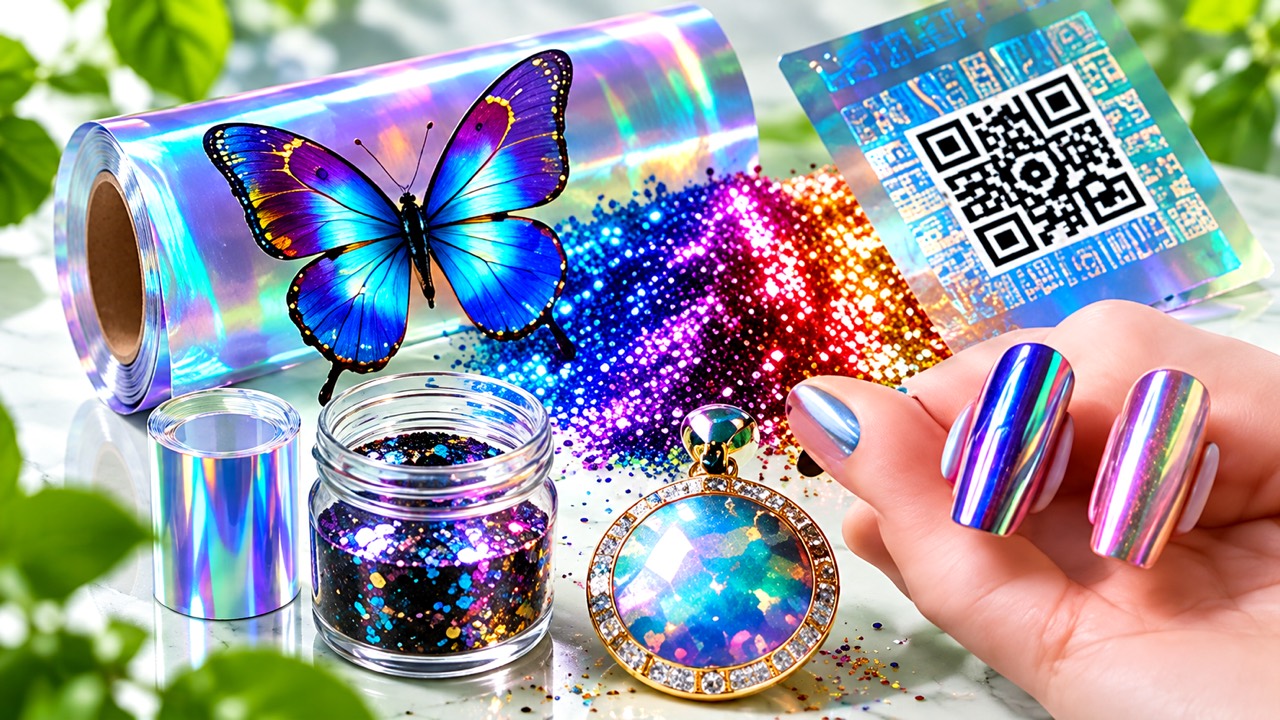
Structural-colour CNC is being studied for anti-counterfeiting, decorative coatings, photonic pigments, nail art, packaging, sensing and passive radiative cooling, and keeps expanding into consumer products and functional materials.
Application directions
| Direction | Products to develop | What customers look for |
|---|---|---|
| Anti-counterfeiting and brand marks | security labels, QR codes, hidden patterns, cards and brand marks | angle-dependent colour, polarisation features, hard to copy, visual recognition |
| Photonic pigments and pearlescent glitter | structural-colour powders, photonic pigments, iridescent particles, bio-based glitter | vivid colour, easy compounding, use in coatings, resins and decoration |
| Premium packaging and labels | cosmetics, spirits, gift boxes, electronics packaging and functional labels | decoration combined with anti-counterfeiting |
| Nail polish and nail art | iridescent polish, nail tips, pearlescent or colour-shifting layers | beauty, angle-dependent colour, compatibility with resins and solvents |
| Gem-like jewellery and crafts | opal-like effects, iridescent pendants, earrings, resin jewellery, art objects | gem-like iridescence, depth, personalised colour |
| Decorative coatings | iridescent coatings on paper, plastic, wood, glass and other surfaces | colour, gloss, adhesion and durability |
| Architectural glass and passive cooling | glass functional films, building optical films, thermal-management composites | solar management, structural colour with passive radiative cooling research |
| Smart sensing and photonic materials | humidity, solvent and strain-responsive materials, smart optical films | visual colour response, chiral optics and functional integration |
What we can provide
CelluBio supplies structural-colour CNC liquid, structural-colour powder and photonic pigment, and structural-colour film, and supports custom development of target colours and applications.
| Form | Features | Best suited to |
|---|---|---|
| Structural-colour CNC liquid | easy to coat, cast, self-assemble and formulate | anti-counterfeiting, labels, structural-colour films, research, functional coatings |
| Structural-colour powder / photonic pigment | easy to add to coatings, resins and decorative systems | photonic pigments, nail art, jewellery, packaging, decorative coatings |
| Structural-colour film | shows iridescent, angle-dependent colour directly | anti-counterfeiting, packaging, jewellery, optical films, display samples |
| Custom products | tuned to target colour, substrate and use | specific colours, forms and customer applications |
Colours can be customised
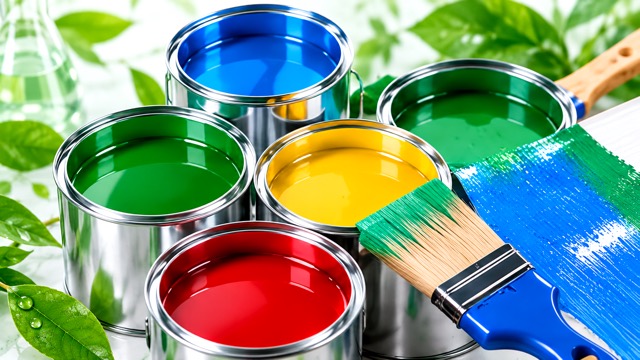
Red, orange, yellow, green, blue, purple, iridescent and gradient effects can be developed for the target application. Structural colour is not obtained by adding dye but by tuning CNC self-assembly, helical pitch and film-forming conditions, so the same CNC can yield different visual effects.
For customers with a defined colour, development follows target colour → product form → substrate and formulation matching → sample testing → application optimisation.
How to choose
| Customer type | Suggested form | First step |
|---|---|---|
| Anti-counterfeiting and labels | liquid or structural-colour film | test patterns and angle-dependent colour on PET, glass or label stock |
| Coatings and pigments | powder / photonic pigment | test dispersion and colour retention in the resin or coating system |
| Nail art | powder or film | test polish-resin compatibility, gloss, adhesion and colour |
| Jewellery and crafts | powder or film | compound with clear resin for gem-like and iridescent effects |
| Packaging | liquid, powder or film | apply structural colour locally on PET, paper or packaging surfaces |
| Glass and building materials | liquid / composite film | test transmittance, reflection, colour and thermal management |
| Research and photonic materials | structural-colour CNC liquid | start from stable self-assembly and basic structural-colour films |
Points to watch in development
Not every CNC forms stable structural colour: the effect depends on rod morphology, size distribution, surface chemistry, self-assembly ability, solids, additives, film thickness and drying, so prefer CNC verified for this purpose.
Adding structural-colour material to resins, coatings or other complex systems can disturb the ordered structure. For nail art, jewellery and coatings, start from powders, photonic pigments or films that already show structural colour, then optimise for the final system.
Architectural glass and passive cooling are frontier functional-material directions; real cooling depends on the complete composite system's solar reflection, mid-infrared emission, transmittance and structure, and cannot be attributed to CNC alone.
Note
This content presents application directions, product selection and early development guidance for structural-colour CNC, not fixed formulations or performance commitments. Verify the structural-colour effect and performance on your substrate, formulation and process. Published research reports CNC structural colour in security labels, nail decoration, decorative coatings, photonic pigments and multi-level anti-counterfeiting, and recent reviews cover smart photonic materials and passive daytime radiative cooling; public claims should rest on specific product test results.